
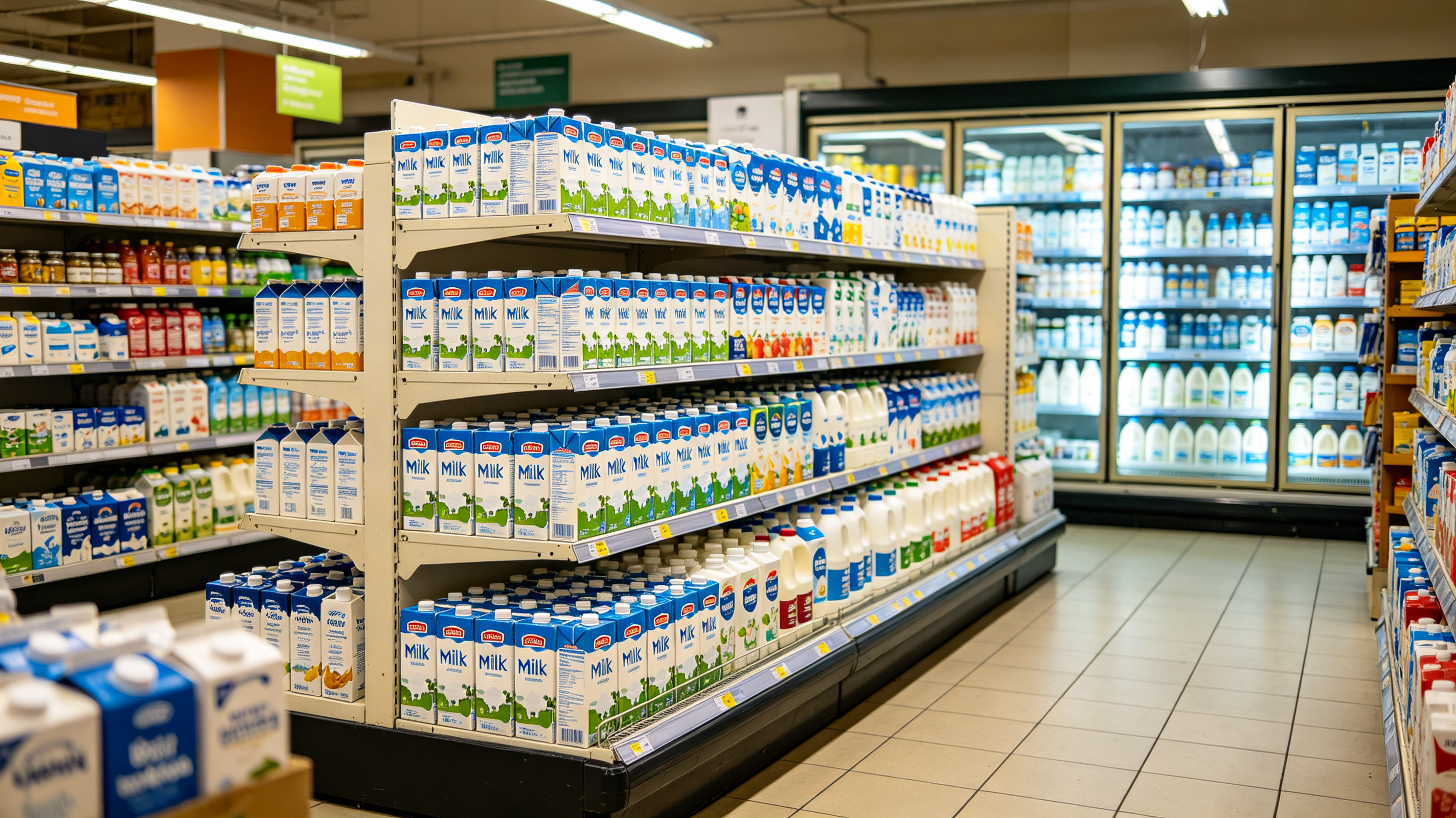
Do常温 milk and juice need refrigeration? Unveiling the hard-core preservation secrets of aseptic paper-aluminum-plastic cartons
<pre><code>When shopping at supermarkets, you'll notice that beverages like pure milk, yogurt, fruit juice, and soy milk generally come in two forms: refrigerated and ambient. Refrigerated drinks require low-temperature storage to stay fresh, while ambient drinks can sit on shelves for months without spoiling or needing preservatives—all thanks to the tetra pack (paper-aluminum-plastic aseptic composite carton). This seemingly ordinary box is a high-tech solution in food packaging. Its multi-layer composite structure and aseptic processing enable long-term freshness without refrigeration or preservatives, making it one of the most widely used eco-friendly packaging solutions for liquid foods globally.</code></pre><pre><code>Many assume it's just thin paper, but it's actually a six-layer precision composite structure. Each layer has a specific function, working together from the outside in to protect beverage quality and completely block external contaminants and spoilage factors.</code></pre><pre><code>1. Outer Paperboard: Provides Structural Support</code></pre><pre><code>As the primary core material, food-grade rigid paperboard acts as the "skeleton" of the package. It enhances stiffness, rigidity, and stability, ensuring the carton maintains its shape during transport, stacking, and drinking. The lightweight paper substrate is easy to cut and significantly reduces overall weight, making it more portable and cost-effective to ship compared to glass bottles.</code></pre><pre><code>2. Outer Polyethylene Layer: Moisture and Dust Protection</code></pre><pre><code>The polyethylene plastic layer bonded to the outer paperboard serves as the first line of defense. It blocks moisture and dust from the air, preventing the paperboard from becoming soft or damaged and avoiding mold growth on the exterior, thus maintaining the structural integrity of the entire package.</code></pre><pre><code>3. Middle Aluminum Foil: Core Freshness Barrier</code></pre><pre><code>This ultra-thin aluminum foil layer, accounting for only 5% of the total weight, is the key technology behind long-term freshness. With exceptional barrier properties, it blocks 100% of light, oxygen, odors, and microorganisms. Since exposure to light and oxygen are primary causes of food spoilage and bacterial growth, this aluminum layer effectively halts these processes, allowing beverages to remain fresh and nutritious without refrigeration or preservatives.</code></pre><pre><code>4. Inner Double-Layer Polyethylene: Sealing and Leak Prevention</code></pre><pre><code>The double-layer food-grade polyethylene between the aluminum foil and the beverage is the safe contact layer. It is non-toxic and chemically inert, ensuring no reactions with the drink. Additionally, it bonds the paperboard and aluminum foil tightly together, seals in liquids to prevent leakage, and blocks external moisture and bacteria, creating a fully sealed, sterile storage environment.</code></pre><pre><code>3. Aseptic Filling Process: Eliminating Spoilage at the Source</code></pre><pre><code>Premium materials require professional processing to maximize their potential. The reason tetra packs last so long lies in the end-to-end aseptic filling technology, which eliminates conditions for bacterial growth throughout the entire process.</code></pre><pre><code>The production process involves three steps: First, the beverage undergoes instantaneous high-temperature sterilization to kill bacteria, molds, and microbes. Second, the cartons are independently sterilized to ensure they are free of contaminants. Finally, filling and sealing occur in a closed, dust-free aseptic chamber, ensuring no external air or bacteria interfere.</code></pre><pre><code>Once filled, the six-layer sealed structure completely isolates air and light, creating a sterile vacuum inside. Without conditions for bacteria to grow or reproduce, this is why ambient drinks don't need preservatives and resist spoilage—unlike ordinary open or non-aseptic packaged foods.</code></pre><pre><code>4. Four Key Advantages Over Traditional Packaging</code></pre><pre><code>1. Safe & Healthy: Zero Preservatives, Pure Taste</code></pre><pre><code>Relying on physical barriers and aseptic processing, these packages preserve the natural nutrients and taste of milk and juice without adding any preservatives or stabilizers. This minimizes chemical intake, making them suitable for all ages and aligned with modern healthy eating standards.</code></pre><pre><code>2. Long Shelf Life: Ambient Freshness</code></pre><pre><code>In normal room temperature conditions, aseptic cartons can store beverages for 6-12 months, eliminating reliance on cold chains. This simplifies home storage and solves preservation challenges for long-distance shipping and remote areas, significantly reducing food waste.</code></pre><pre><code>3. Lightweight & Energy Efficient: Better Value</code></pre><pre><code>Compared to glass bottles and metal cans, tetra packs are extremely lightweight and shatterproof, making transport, storage, and carrying much easier. They also drastically reduce logistics energy consumption and breakage rates, lowering production costs and making high-quality affordable drinks accessible to everyone.</code></pre><pre><code>4. Eco-Friendly & Recyclable: Stronger Sustainability</code></pre><pre><code>Contrary to popular belief, composite cartons are recyclable. Through specialized processes, paper, plastic, and aluminum layers can be separated. The recovered paper pulp can be reused for new paper products, while plastics and aluminum can be reprocessed. With high recycling rates, these are renewable green packaging solutions, offering a more environmentally friendly and low-carbon alternative to single-use plastics.</code></pre><pre><code>5. Common Myths Debunked</code></pre><pre><code>Myth 1: Ambient Milk Contains Many Preservatives ❌</code></pre><pre><code>Ambient beverages rely on aseptic processing and multi-layer physical barriers, not preservatives. Legitimate aseptic carton beverages contain no preservatives in their ingredient lists and are safe and compliant.</code></pre><pre><code>Myth 2: Cartons Are Less Safe Than Plastic or Glass ❌</code></pre><pre><code>The inner layer in direct contact with food is made of food-grade polyethylene—non-toxic, odorless, heat-resistant, and corrosion-resistant. Meeting national food packaging safety standards and produced via strict aseptic filling, their safety matches or exceeds traditional packaging.</code></pre><pre><code>Myth 3: Used Milk Cartons Are Trash and Must Be Discarded ❌</code></pre><pre><code>Tetra packs are high-value recyclables. Discarding them wastes resources. When properly sorted and recycled, they achieve a 100% resource recovery rate, making them an excellent example of sustainable reuse.</code></pre><p>6. Daily Usage Tips</p><pre><code>1. Store unopened aseptic cartons in a cool, dry place away from direct sunlight and high temperatures to prevent material aging and flavor degradation;</code></pre><pre><code>2. Once opened, the seal is broken and the sterile environment is compromised. Refrigerate immediately and consume within 24 hours;</code></pre><pre><code>3. After finishing, rinse the carton briefly, flatten it, and dispose of it in the recycling bin to support resource circularity.</code></pre><pre><code>Conclusion</code></pre><pre><code>The humble paper-aluminum-plastic aseptic carton may look simple, but it represents a perfect fusion of materials science and food technology. With advantages in lightweight design, high safety, extended freshness, and recyclability, it has transformed how liquid foods are stored and distributed, bringing fresh, additive-free drinks to households worldwide. Understanding its principles helps you make confident choices when buying ambient beverages and fosters a mindset for green recycling. Inside this small package lies significant technological innovation and environmental wisdom.</code></pre>